
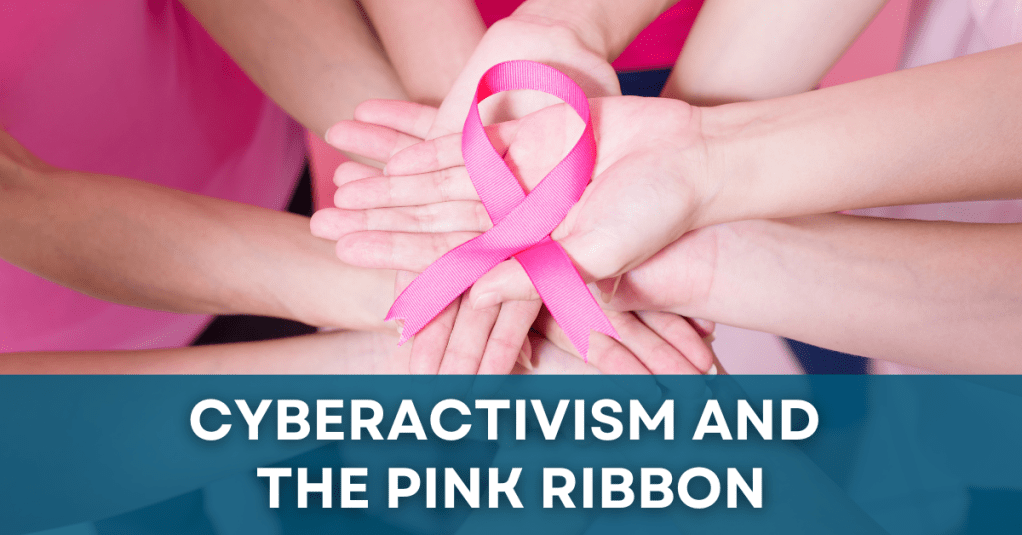
“Breast cancer is the second most common cancer among women in the United States”
(CDC, 2021)
Mom’s Scare
I remember when my mom was crying on the couch. The fear and uncertainty were unlike anything I had ever seen in her eyes. Nervously I sat with my brother and braced myself for the news.
…
At 17 years old, you want to believe nothing will hurt your family, but how do you begin to combat an internal threat? You feel helpless and scared that the only human who swore to protect you will have to face a grueling battle with cancer.
We were lucky, and it turns out my mother had a treatable condition that required minimal life adjustments. Unfortunately, many will face the reality of having to fight against breast cancer. But unlike my mother, they will not be given good news. Instead, they face a prolonged and difficult recovery that takes a toll on their physical, mental, and emotional health. Nevertheless, bringing awareness to the devastating impact of breast cancer is the first step in eradicating this disease from our world.
Cyberactivism and Social Media
Social media has played a pivotal role in raising breast cancer awareness along with other various illnesses. Organizations looking to raise awareness for their cause utilize community networks to promote cyberactivism. “Digital activism, also known as cyberactivism, is a form of activism that uses the Internet and digital media as key platforms for mass mobilization and political action” (Fuentes, 2014). Cyberactivism has been an integral part of the worldwide web and was originally used to distribute information instantaneously. However, as the communities on the internet developed with time, they found new ways of improving grassroots outreach.
Modern cyberactivism can mobilize and engage an audience through the use of social media campaigns. The reason cyberactivism is highly successful is that humans are highly cooperative creatures. “One of the reasons these calls hold so much virality is because individuals like the idea of others associating them with charity or a good cause. Humans want to do the right thing “(Mahoney, 2016). In addition, engaging in cyberactivism makes the audience feel good, which helps amplify the call to action. A Facebook case study on breast cancer awareness highlights how cyberactivism can increase audience members through memes but falls short in making a difference.
Facebook’s Breast Cancer Meme
A meme is defined as information that is duplicated and spread on social media. “Memes carry information, are replicated, and are transmitted from one person to another, and they have the ability to evolve” (Rogers, 2014). The success of memes lies in the way they spread. Easy-to-follow directions, a sense of community, and minimal requirements for engagement are a few reasons why memes spread rapidly on social media. Memes are traditionally used to spread funny photos or GIFs online, but they can also encourage cyberactivism and awareness. For example, a highly successful awareness strategy was the Facebook Breast Cancer Meme, asking women to post their bra color on their status update. At the height of the campaign, the meme was number 11 on Google Trends and was making fast gains on Twitter (James, 2010). Below is an example of the original post and its evolution the following year.
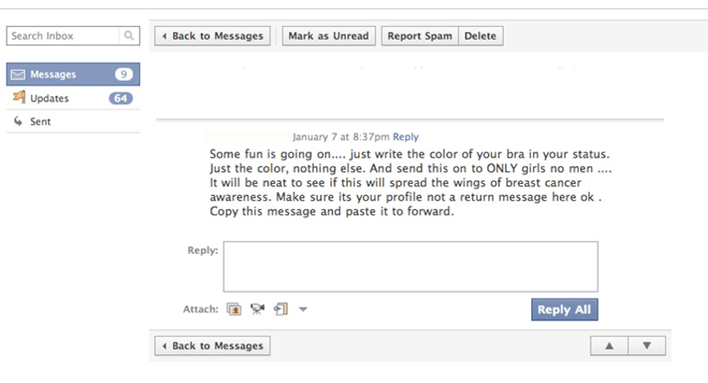
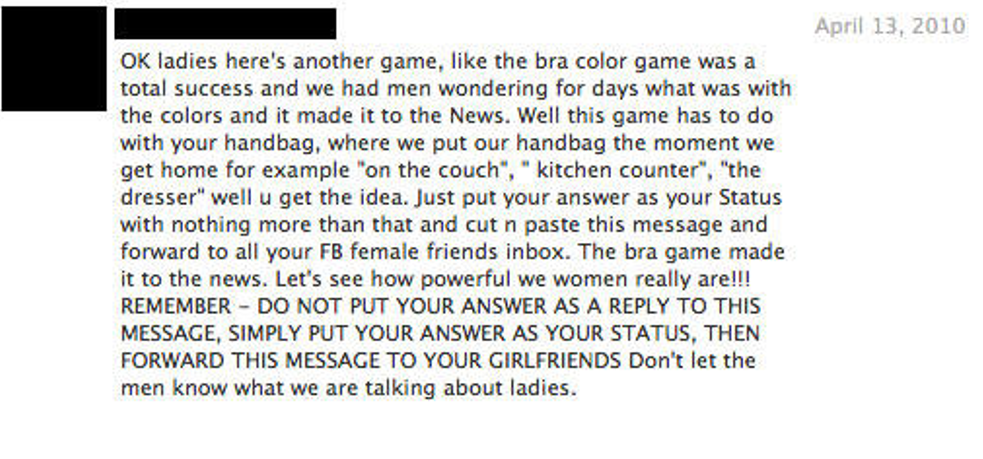
While no one knows where the meme originated from, the Bra Color campaign spread rapidly on Facebook due to the simplicity of the instructions and easy replication. The meme emphasized community building by informing participants that the message was only meant for them and that they should replicate the experience within their circle of influence. The cryptic message entices nonparticipants to seek more information which leads to an increase in receptive audience members. “The campaign has served as a fast, free and fun way for women to raise awareness about breast cancer and remind other women to get themselves examined” (James, 2010). The simple meme successfully raised awareness because it was a fun way to captivate, engage, and enhance community awareness on social media. However, although the campaign was highly successful, it did not encourage audience members to seek additional information or mobilize the audience to donate to the cause. It is even debatable if the meme made a difference since raising awareness is not the same as a call to action.
Not All Campaigns Are Equal
Even with all the awareness raised by breast cancer campaigns, the illness is struggling to see significant progress in treatment, prevention, survival, and inequalities. Unfortunately, the Facebook meme is only one out of the many problematic campaigns surrounding breast awareness. The video below demonstrates how harmful pinkwashing can be.
Think before you pink is an organization dedicated to raising awareness of how the “Pink Ribbon” culture distracts from meaningful progress in six fundamental ways. Organizations, like KFC, Kohls, NASCAR, and Hooters, have been criticized for their reliance on the pink ribbon to spread misinformation, create empty awareness, exploit breast cancer for profit, linking the ribbon to a product that causes breast cancer, objectifying/ sexualizing breasts and bodies, and obscuring the harsh reality of breast cancer (Wall, 2014). However, while many organizations exploit cyberactivism, there is one nonprofit which shines above the rest.
St. Jude Children’s Research Hospital
St. Jude is an organization close to my heart. It provides an excellent example of a nonprofit that can leverage social media to grow its community through a call to action. St. Jude Children’s Research Hospital is the only National Cancer Institute dedicated to helping children survive cancer and other life-threatening diseases. Treatments at St. Jude are 100% free, and survival rates have increased from 20% to 80% since the hospital began helping children 50 years ago. St. Jude relies heavily on marketing to help them maintain its operating budget of over $1 billion. Their cyberactivism revolves around engaging the community through uplifting emotional stories.
The organization shares heart-tugging stories of current patients, recovered patients, donors, and activists that encourage the audience to donate or participate in certain activities. My favorite activity is the Holiday E-cards campaign which encourages audience members to send a preselected e-card to the children in their hospitals. Below is Valentine’s Day campaign, which shows how successful they are at engaging their audience members through empathy.
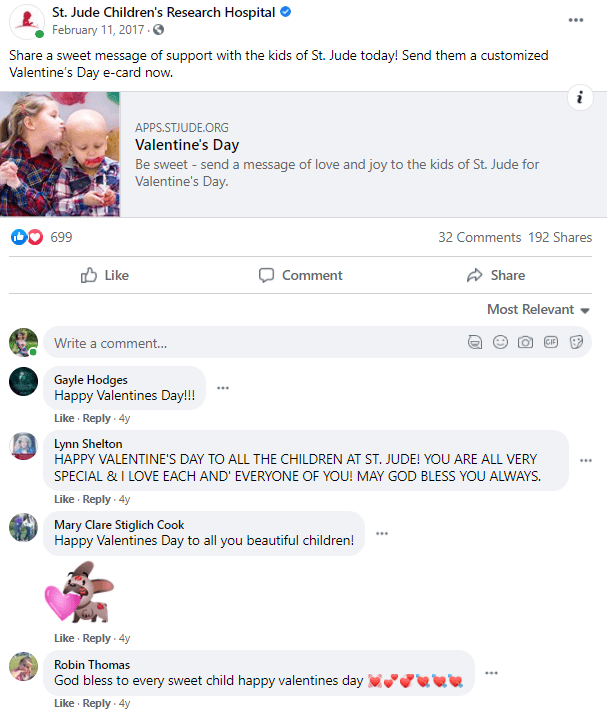
The preselected e-cards are all works of art from current patients, making it difficult for anyone with a heart to turn back. The campaign also has a share button for social media that encourages audience members to influence their friends to make a difference. The e-card campaign makes it easy for audience members to engage in cyberactivism and encourages them to donate at the end of their submission. Even if audience members do not donate, they receive a thank you email on behalf of the hospital, leading to increased brand exposure and awareness. In addition, the small campaign conditions audience members to trust the brand so that next time the organization is asking for a donation, there is no hesitation or question if the money will make a difference. St. Jude is the perfect example of an organization that incorporates a strong call to action into its cyberactivism campaigns. If you want to learn more about how this amazing organization makes a difference, you can visit their website at https://www.stjude.org/.
References
CDC. (2021). U.S. Cancer statistics data visualization tools. https://www.cdc.gov/cancer/breast/statistics/index.htm
Fuentes, M. A. (2014, June 25). Digital activism. Encyclopedia Britannica. https://www.britannica.com/topic/digital-activism
James, S. D. (2010, January 8). Bra Color Status on Facebook Goes Viral. ABC News. https://abcnews.go.com/Health/bra-color-status-facebook-raises-curiosity-money-viral/story?id=9513986
Mahoney, L. M., Tang, T. (2016, September 15). Strategic Social Media: From Marketing to Social Change. [[VitalSource Bookshelf version]]. Retrieved from vbk://9781118556900
Rogers, K. (2014, February 28). Meme. Encyclopedia Britannica. https://www.britannica.com/topic/meme
Wall, A. (2014, October 1). Breast Cancer Action Demands Pink Ribbon Marketers Stop the Distraction. Breast Cancer Action. https://bcaction.org/2014/10/01/breast-cancer-action-demands-pink-ribbon-marketers-stop-the-distraction/
 Hilda Chang Consulting